Quick answer: a successful company holiday party is mostly an exercise in matching the group to the right event format. The key decisions are guest count, date, seated versus social service, private-space requirements, food and beverage, billing, AV, and transportation.
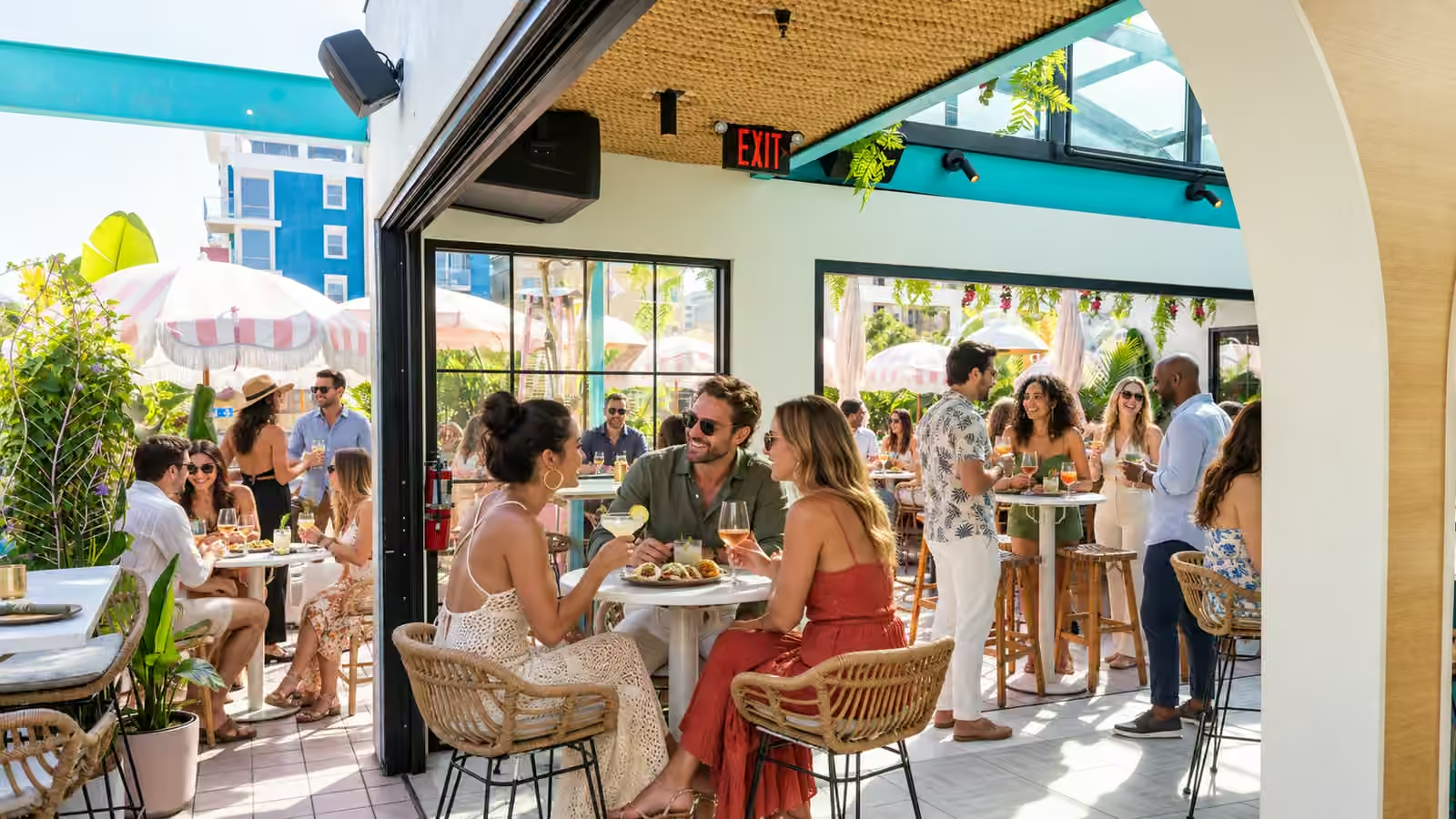
For Coco Maya in Little Italy, holiday events can range from planned company dinners to larger private celebrations, with indoor, patio, and full-venue configurations for groups up to approximately 180 guests depending on the setup.
The goal should not be to reproduce a generic Christmas party. It should be to build a year-end gathering that fits the company, the people attending, and the reason everyone is getting together.
Start with the type of celebration
Before looking at menus or decor, decide what kind of event you are actually planning.
Common corporate holiday formats include:
- seated company dinner
- cocktail-style holiday party
- team appreciation dinner
- client appreciation event
- leadership dinner
- year-end awards gathering
- department celebration
- full-company social event
Each one creates different space and service requirements.
A 20-person leadership dinner may need a private room and a structured meal. A 100-person company party may work better with a more social patio or larger venue configuration.
Build around a realistic guest-count range
Guest count affects almost every other decision.
At Coco Maya, the dedicated holiday-party program is designed for groups from approximately 20 to 180 guests, depending on the event format and space.
The corporate-events program also supports smaller business gatherings in the 10–100 guest range.
Those ranges give companies flexibility: a smaller team dinner does not need to be planned like a full-company party, and a larger celebration does not need to be squeezed into a standard restaurant reservation.
You do not need a final RSVP count before contacting the venue. A realistic estimate is enough to begin.
Choose between seated, cocktail-style, and hybrid formats
The event format determines how guests use the room.
Seated dinner
Best for:
- leadership dinners
- awards or recognition
- client-hosted meals
- teams that want longer conversation
- events with a clear dinner program
Cocktail-style gathering
Best for:
- larger social groups
- networking
- teams that want freedom to move
- less formal year-end celebrations
- events where drinks and conversation are central
Hybrid event
A hybrid format may begin with cocktails and social time, then move into dinner, remarks, or dessert.
At Coco Maya, holiday planning can be built around private dining, patio use, or a larger venue configuration depending on the preferred format.
Use the calendar strategically
November and December create concentrated demand because many companies want the same Thursday and Friday evenings.
If the company has flexibility, consider:
- Monday through Wednesday evenings
- lunch or late-afternoon events
- early December rather than the final two weeks before the holidays
- January appreciation events
- a weekday happy-hour format
The best date is not necessarily the most traditional date. It is the one that produces the best attendance and gives the venue enough room to execute the event properly.
For preferred seasonal dates, contact the venue as soon as the planning window is established.
Think about the time of day, not just the date
Coco Maya opens before noon every day; check the separate daily kitchen and bar hours when planning a restaurant visit. Confirm private-event timing with the events team.
That means a company celebration does not have to begin at 7:00 PM.
Possible formats include:
- holiday brunch
- working lunch followed by a celebration
- afternoon team gathering
- 4:00 PM happy-hour event
- seated evening dinner
- later Friday or Saturday celebration
Dinner service begins nightly at 5:00 PM, while weekday happy hour runs from 4:00–6:00 PM Monday through Friday.
A different time of day can make the event feel more distinctive and may also work better for employees with family or commuting constraints.
Decide whether the group needs dedicated space
A small team dinner may work with an ordinary reservation.
A company holiday party becomes more appropriate for private-event planning when it needs:
- dedicated seating
- a private room
- patio space
- full-venue use
- custom menus
- drink packages
- decor coordination
- AV
- a structured timeline
- one company point of contact
Coco Maya offers private dining, patio, and larger venue configurations specifically for those needs.
Build the menu around the format
Food service should support the way the event is supposed to feel.
For a seated dinner, the priority may be pacing and conversation.
For a cocktail-style event, the menu needs to work while guests are standing, circulating, and talking.
For a hybrid event, food may be staged in phases.
Coco Maya’s private-event program supports custom menus and drink packages. Dietary requirements should be discussed early so vegetarian, gluten-conscious, and other needs can be incorporated into the event plan rather than handled reactively.
For a sense of the restaurant’s dinner style, the current dinner collection includes Prime Ribeye, Maine Lobster Roll, Drunken Mussels, and tacos with lobster, oxtail, and avocado options.
Decide how the bar should work
A holiday party is easier for guests when the beverage plan is clear.
Companies may choose a hosted format, a limited selection, or another structure agreed with the venue.
The important point is to decide that before the event.
Guests should not have to determine at the bar whether drinks are hosted, limited, or individual-pay.
If the group is primarily looking for an informal after-work gathering, Coco Maya’s weekday happy hour may be a simpler alternative to a fully private holiday event.
Plan AV and remarks before the day of the event
Many company holiday parties include:
- leadership remarks
- employee recognition
- awards
- slides
- a short presentation
- a toast
Coco Maya can support basic AV in the private dining room for corporate events when the requirements are confirmed in advance.
Do not assume microphones, displays, adapters, or other equipment will be available without discussing the exact need.
The venue should know:
- who is speaking
- when remarks are scheduled
- whether slides are involved
- what connection or playback equipment is needed
- whether the program affects food service timing
That coordination is what keeps the presentation from interrupting the meal.
Handle company billing in advance
For a corporate event, billing should be part of the planning conversation.
Coco Maya’s corporate-event program supports centralized billing and itemized invoices, which is useful for expense reporting and reimbursement.
Before confirming the event, decide:
- who is authorized to approve charges
- whether one invoice is required
- whether tax or gratuity needs special internal handling
- whether the company needs itemization
- who will close the event financially
The goal is to avoid making the final 15 minutes of the party about paperwork.
Plan for dietary requirements across the company
Large company groups almost always include multiple dietary needs.
Collect the significant restrictions early and pass them to the venue before the menu is finalized.
Coco Maya’s corporate-event planning specifically supports dietary accommodations across a group.
This is one of the strongest reasons to move a larger company dinner into a planned event format instead of treating it like several unrelated table reservations.
Treat transportation as part of the guest experience
Coco Maya is located at 1660 India St in Little Italy, within downtown San Diego.
When planning a company event, think about:
- where employees are coming from
- whether clients are staying downtown
- parking expectations
- rideshare demand
- whether the team is coming directly from an office or conference
- where guests may go afterward
Little Italy can work well when the company wants the restaurant to be part of a broader downtown evening rather than an isolated banquet-room event.
For teams attending a conference, the San Diego Convention Center dining guide covers that specific planning scenario.
Build a simple run of show
A holiday party does not need a minute-by-minute production schedule, but the venue should know the major moments.
A simple evening might look like:
- 5:30 PM: guest arrival and cocktails
- 6:15 PM: dinner begins
- 7:15 PM: company remarks or recognition
- 7:30 PM: dessert and continued social time
- 8:30 PM: event close
The exact times are less important than making sure food service, remarks, AV, and bar service are not competing with each other.
Ask the venue operational questions, not just aesthetic ones
When comparing holiday-party venues, ask:
- What group size fits each space comfortably?
- Is the space private or semi-private?
- What event formats work best there?
- What menu formats are available?
- Can dietary restrictions be accommodated?
- Is basic AV available?
- Can outside vendors or decor be coordinated?
- How is billing handled?
- Who is the event-planning contact?
- What information is needed to receive an initial proposal?
These questions make it easier to compare venues on the experience they can actually deliver.
Keep the event inclusive without making it generic
A year-end celebration does not need to be tied to one specific holiday.
Many companies prefer broader language such as:
- company holiday party
- year-end celebration
- team appreciation event
- seasonal gathering
- client appreciation dinner
That allows the event to feel festive without requiring every guest to relate to the same tradition.
Coco Maya’s holiday-party page intentionally covers company celebrations and year-end events rather than only Christmas parties.
When should you use the corporate-events page instead?
Use corporate events when the gathering is primarily a business event: a client dinner, presentation, working meal, leadership gathering, or company function that is not specifically seasonal.
Use the holiday-party page when the seasonal or year-end celebration itself is the primary purpose.
The venue may be the same, but the search intent and planning priorities are different.
Holiday-party planning checklist
Before reaching out, have these details ready:
- preferred date
- alternate date if available
- expected guest-count range
- seated, cocktail-style, or hybrid format
- indoor, patio, or flexible space preference
- food and beverage expectations
- dietary requirements
- AV or remarks
- decor or vendor needs
- billing requirements
- approximate event duration
With those details, the event team can give you a much more useful first response.
For Coco Maya, start with holiday parties and company celebrations or the broader corporate-events page.