
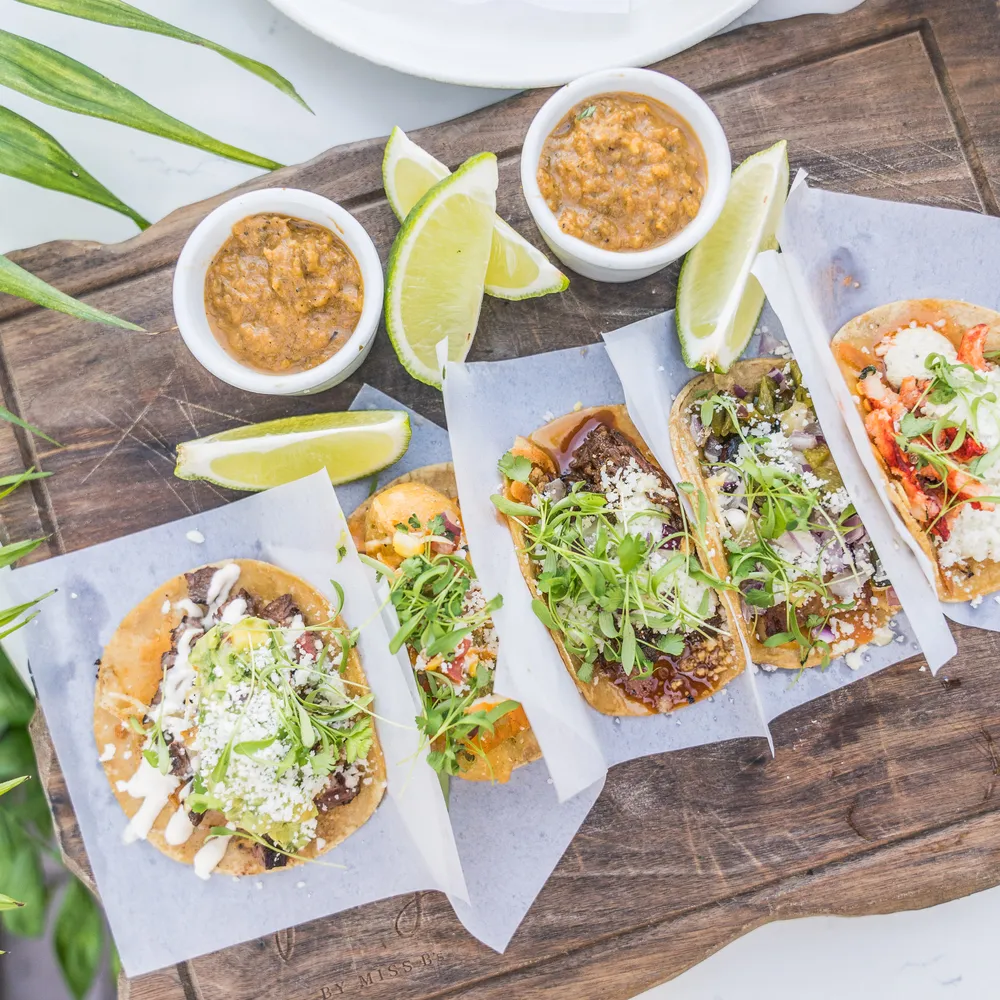
Walk into any restaurant in Little Italy and you’ll hear the sizzle of grills. It’s the soundtrack of the neighborhood—charred proteins, caramelized vegetables, the smell of smoke drifting up to the second floor. But not all that sizzle sounds the same. At Coco Maya, we’ve chosen to invest in a Josper oven, and that choice fundamentally changes what lands on your plate. This isn’t about being trendy. It’s about technique, flavor, and what happens when you take cooking seriously enough to choose the harder path.
What Is a Josper Oven, Really?
A Josper oven isn’t a grill. It’s not quite an oven either. It’s a hybrid—a Portuguese-designed cooking vessel that combines the intense, direct heat of live fire with the ambient, radiant heat of an enclosed chamber. The result is a machine that reaches temperatures up to 400°C (752°F) and maintains them with precision.
The design is deceptively simple: a firebox sits at the base, a cooking grate sits above it, and a dome-shaped hood captures the heat and smoke. The magic is in the control. You can adjust the grate height to fine-tune heat intensity. You can manage airflow. You can move food between the direct flame zone and the gentler radiant zone without stopping cooking.
A traditional grill, by contrast, is straightforward: heat comes from below, food sits on a grate, and that’s the conversation. Some grills have lids, which helps, but the engineering is fundamentally different. Temperature control is cruder. Heat distribution is less even. Smoke escapes freely into the air.
Heat Distribution: Where the Real Difference Lives
This is where the comparison gets interesting—and where Coco Maya’s commitment to the Josper oven becomes visible in every bite.
Traditional grills create a temperature gradient. The area directly over the coals or flame gets intensely hot—often 400°F to 500°F at the grate surface. Move six inches to the side, and you’re cooking at 250°F. This forces cooks to constantly rotate proteins, move them around, and compensate for uneven heat. A perfectly cooked steak on one side might be undercooked on the other. Fish can dry out on one edge while remaining raw on the other.
The Josper oven’s dome captures and radiates heat evenly across the entire cooking surface. The enclosed environment creates a convection effect—hot air circulates, not just radiates from below. A piece of fish cooks at a consistent temperature across its entire surface. A steak develops an even, caramelized crust while the interior stays uniformly pink. The precision matters, especially for delicate proteins like oysters or thin-cut fish, which are central to Coco Maya’s Modern American coastal menu.
We’re not just cooking faster or hotter. We’re cooking smarter.
Flavor Depth: The Smoke Question
Here’s what most people don’t understand about grilling: smoke is a side effect of traditional grilling, not a feature. When you burn wood or charcoal, you get smoke. That smoke rises. Some of it touches your food, but most of it disappears into the air above the restaurant.
The Josper oven captures that smoke. The enclosed dome means smoke circulates around the food multiple times before it escapes. Each pass adds another layer of flavor—not the acrid, burnt taste of oversmoking, but a complex, savory depth that builds gradually. It’s the difference between a steak that tastes like it was grilled and a steak that tastes like it was smoked.
At Coco Maya, our Josper oven produces a distinctive flavor signature. The proteins develop a caramelized, almost lacquered exterior—what chefs call the Maillard reaction on steroids. Underneath, the meat stays juicy because the radiant heat cooks more gently than direct flame. Vegetables get charred on the outside but maintain their texture inside. Even something as simple as a piece of bread becomes textured, complex, and alive.
Traditional grills produce char, which is great. But they don’t produce the same layered, smoky depth. The heat is too direct, the smoke dissipates too quickly, and the lack of ambient heat means cooks have to work harder to achieve evenness.
Precision and Consistency
If you order the same dish at a traditional grill restaurant twice, you might get two different results. The cook’s mood, the ambient temperature, the time of day, the specific position on the grill—all of these introduce variables.
The Josper oven reduces those variables. Temperature control is precise. Heat distribution is consistent. A cook can replicate a dish almost identically from night to night. That consistency is what separates restaurants that are good on a Tuesday from restaurants that are reliably excellent every single night.
This matters when you’re trying to build a reputation. When you’re a destination in Little Italy, you can’t have an off night.
Cost and Commitment
This is the part where honesty matters: Josper ovens are expensive. A quality unit costs $15,000 to $25,000 before installation, ventilation, and training. A traditional grill might cost $3,000 to $8,000. Over time, the Josper oven requires more maintenance. It demands more from your cooks—they need to understand the equipment, not just operate it.
Most restaurants don’t make this investment. It’s easier to buy a grill, hire someone who knows grills, and move on. That’s why when you look at the landscape of Little Italy dining, you see a lot of traditional grills and relatively few Josper ovens.
Coco Maya chose differently. We chose the harder path because we believe it produces better food. That’s not a marketing decision. It’s a cooking decision.
The Technique Factor
Beyond equipment, the Josper oven demands a different cooking philosophy. Traditional grilling is about high heat and quick cooking. Josper cooking is about understanding the interplay between direct and indirect heat, about timing, about knowing when to move a protein and when to leave it alone.
Our team at Coco Maya has invested in training. Our cooks understand the Josper oven’s zones—the hot zone near the coals, the moderate zone in the middle, the gentle zone toward the back. They know how to use those zones to cook different items simultaneously at different temperatures. They understand how to manage smoke and flame. This expertise is what separates a Josper oven from an expensive toy.
When you eat at a restaurant that uses a traditional grill, you’re eating food cooked with one tool. When you eat at Coco Maya, you’re eating food cooked with precision, control, and intention.
Why This Matters in Little Italy
Little Italy is full of good restaurants. There are places serving Italian classics, coastal fare, and everything in between. If you’re looking for the best restaurants little italy san diego has to offer, you’re looking for places that have made deliberate choices about how they cook.
The Josper oven is one of those choices. It’s not the only factor that makes a restaurant great—sourcing matters, technique matters, hospitality matters. But when you’re comparing two restaurants with similar sourcing and similar hospitality, the equipment and the skill to use it become the deciding factor.
At Coco Maya, we’re not trying to out-traditional-grill the traditional grills. We’re trying to cook better. The Josper oven is how we do that.
Josper Oven vs Traditional Grill: The Verdict
If you’re looking for straightforward, honest grilled food, a traditional grill gets the job done. Thousands of restaurants prove this every day. If you’re looking for layered flavor, precise cooking, and consistency, the Josper oven wins. There’s no hedging here—it’s the better tool for the job.
The question isn’t whether a Josper oven is better than a traditional grill in some abstract sense. The question is what you’re willing to invest to cook the best food possible. For Coco Maya, the answer has always been: whatever it takes.
When you’re planning your next dinner out in Little Italy, think about what you’re looking for. Are you looking for good food, or are you looking for food that was cooked with intention? If it’s the latter, you know where to find us. Contact Us to secure your table and experience the difference that precision cooking can make.